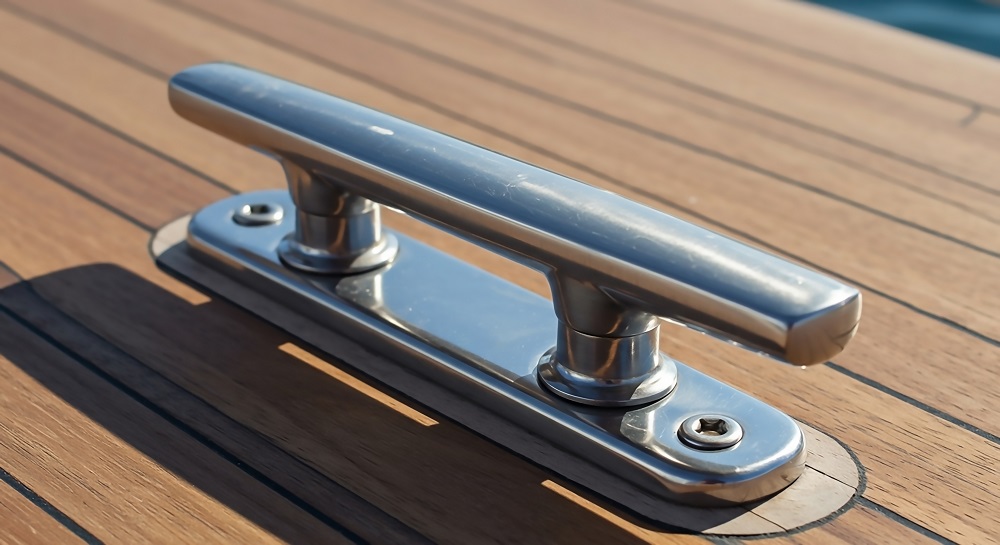
The surface finish of stainless steel screws is a finishing process for the components that is extremely important.
In fact, the surface finish of screws directly affects key characteristics such as corrosion resistance, aesthetics, durability, and ease of assembly. Choosing the correct finish ensures reliability and performance even in aggressive environments.
Types of Surface Finish
Stainless steel screws can be treated with various finishes, each offering specific advantages.
Polishing (bright)
- Bright and uniform appearance
- Removes residual oils and greases from manufacturing
- Ensures smooth, friction-free assembly
- Standard supply finish for Viteria Fusani
Passivation
- Chemical treatment that creates a protective chromium oxide layer
- Significantly increases corrosion resistance, an essential attribute for use in aggressive environments such as chemical or marine industries
Zinc Plating
- Application of a thin additional protective layer
- Improves protection in humid environments or in contact with mild chemicals
- Not always compatible with high temperatures or heavy mechanical loads.
Why Surface Finish Matters
As mentioned, surface finishing of screws provides a qualitative improvement in the performance of each individual component.
In fact, surface finishes offer:
- Corrosion protection
Smooth, treated surfaces reduce points of attack for rust or oxidation - Aesthetics
The appearance of the screw becomes important, especially in visible applications - Ease of assembly
Uniform surfaces reduce friction and tool wear - Durability
Correct finishes extend the useful life of the screw.
Summary Table of Finishes
| Finish | Main Characteristics | Ideal Environments |
| Polished | Bright, easy to clean | Internal and external aesthetic applications |
| Passivated | Protective layer, high corrosion resistance | Marine, chemical, industrial |
| Zinc-plated/coated | Additional protection, good surface resistance |
Viteria Fusani, manufacturer since 1955, offers polishing as the standard supply finish, providing parts free of any grease residues from the production process and ensuring smooth, trouble-free assembly.