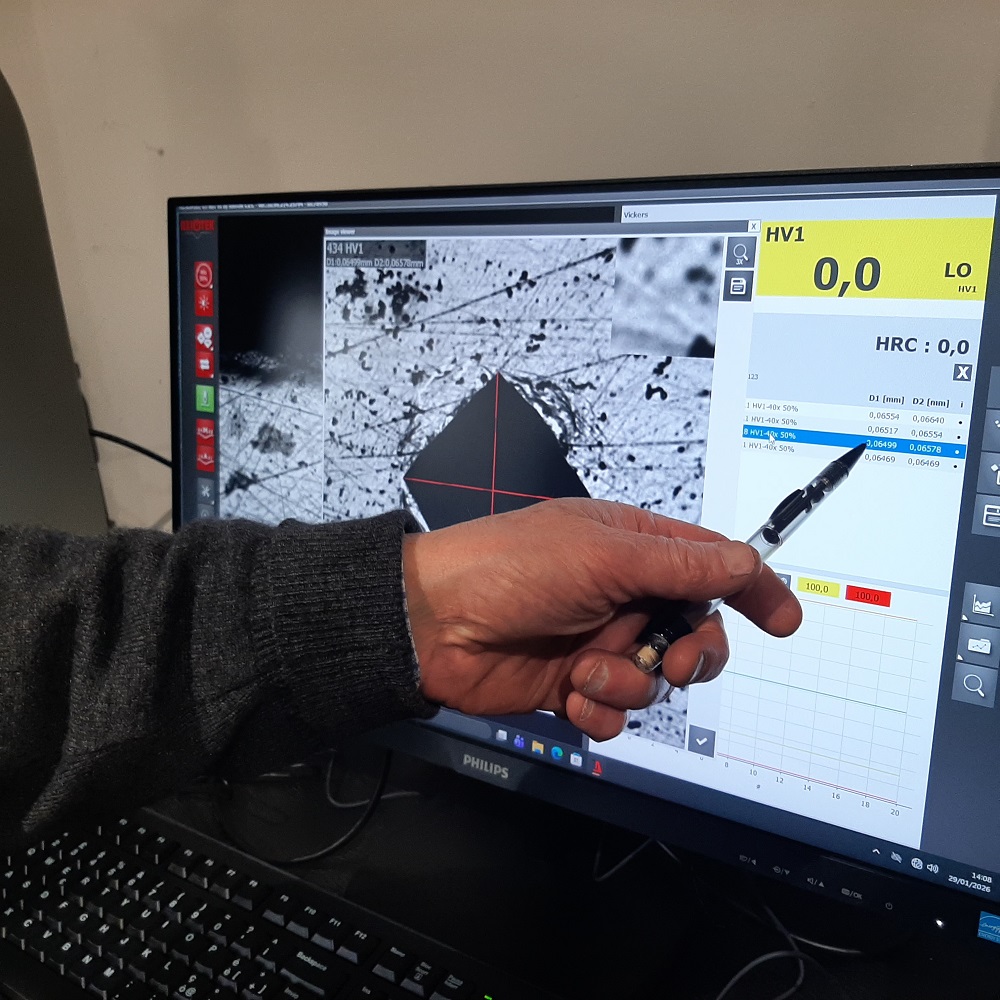
The strength classes of carbon steel or low-alloy steel screws and bolts indicate the level of mechanical strength provided, according to the ISO 898-1 standard.
These classes allow you to specifically know the tensile strength and yield strength. This, of course, enables selecting the most suitable component for the application and the material used.
Screw strength classes apply to components with a nominal thread diameter of less than 39 mm.
The class designation consists of two numbers separated by a dot:
- The first number indicates the minimum tensile strength;
- The second number represents the percentage ratio between the yield strength and the tensile strength.
ISO Nomenclature for Screws
As mentioned above, screws are identified by a numerical code (e.g., 8.8, 10.9, or 12.9) that defines their strength class.
The calculation to determine the tensile and yield strength provided by the component is as follows:
- First number × 100 = minimum tensile strength (MPa).
- Second number × 10% × first number = yield strength.
This system allows for a quick comparison of the mechanical properties of different components and helps choose the correct screw based on the expected load.
For example, a class 8.8 screw can provide:
- Tensile strength ≈ 800 N/mm² (i.e., 8 × 100)
- Yield strength equal to 80% of tensile strength (i.e., 640 N/mm²) (i.e., 8 × 80)
Mechanical Values and Typical Uses of Screws
Below is a comprehensive table showing the mechanical values offered by the most commonly used screw classes.
| Class | Tensile Strength (N/mm²) | Yield Strength (N/mm²) | Typical Use |
| 3.6 | 300 | 180 | Low-strength bolts |
| 4.6 | 400 | 240 | Low-strength bolts |
| 4.8 | 400 | 320 | Low-strength bolts |
| 5.6 | 500 | 300 | Medium-strength bolts |
| 5.8 | 500 | 400 | Medium-strength bolts |
| 6.8 | 600 | 480 | Medium-strength bolts |
| 8.8 | 800 | 640 | High-strength bolts |
| 10.9 | 1000 | 900 | Very high-strength bolts |
| 12.9 | 1200 | 1080 | Very high-strength bolts |
Naturally, higher classes are generally used in applications subjected to high loads and cyclic stresses, where good resistance is required.
Differences in Use Between Classes
Here are some examples of screw use based on their strength class.
Class 8.8 Screws
This class provides components suitable for general and light structural applications. It offers a good balance between strength and cost.
Class 10.9 Screws
Components in this class are used for more demanding mechanical situations, such as engines and industrial machines, where higher yield strength is required.
Class 12.9 Screws
Screws in this strength class can be used in extreme conditions, with high loads and concentrated stresses. Hardened alloy steel is often used for this class of screws, which ensures maximum safety.
Matching Screws and Nuts
To ensure proper functioning of the threaded connection, the correct match between the screw class and nut class must be observed. Below is a table showing nut classes and compatible screw classes.
| Nut Class | Compatible Screw Classes |
| 4A | 3.6 – 4.6 |
| 4D | 4.6 – 4.8 |
| 5S | 4.8 – 5.6 |
| 6S | 5.6 – 5.8 – 6.6 |
| 8G | 6.8 – 8.8 |
| 10K | 8.8 – 10.9 – 12.9 |
What Type of Strength to Look for in Screws?
When discussing screw strength, it is important to understand what type of strength is actually required.
If high tensile strength and core hardness are needed, suitable for withstanding high loads without deforming, screws of class 8.8 or higher should be chosen, often obtained through tempering treatments that harden the entire material.
If surface strength is the primary concern, such as ensuring proper thread formation in the material, the best solution is screws with surface hardening, obtained through carburizing or carbonitriding treatments.
So, understanding if core or surface strength is required, is the first step in selecting the correct screw.
Stainless Steel, Corrosion Resistance, and Mechanical Strength
Stainless steel is often automatically associated with a “strong” material.
In reality, this strength mainly refers to corrosion resistance, due to its chemical composition and chromium content (with differences between more or less ferritic stainless steels).
If mechanical strength and hardness are needed, it is important to specify the required performance. Stainless steel screws can also be produced in different strength classes.
At Viteria Fusani, we also produce stainless steel screws in A2-50, A2-70, and A2-80 according to ISO 3506. This allows selecting the most suitable solution based on the loads to be supported and the function of the connection.
Materials and Quality According to Viteria Fusani
Viteria Fusani, a manufacturer since 1955, produces high-quality screws using quality steels and certified heat treatments.
This ensures compliance with ISO strength classes, reliability, and long life of every component produced.
Viteria Fusani always keeps the customer’s needs in mind, to understand the expected performance of the screw and propose the right solution, while respecting the technical standards required by industry regulations.
The company experience, gained through years of solving problems, has allowed to identify the best cycles to ensure repeatable and constant results.